

"A household residing in north London is looking for an exceptional and qualified instructor to assist their smallest child on his early path to turning into an English gentleman."
Upon seeing this post, you might naturally miss the term "initial stages" as simple a turn of phrase.
However, it may be the most significant aspect of this unusual job advert, as it attempts to recruit a mentor for a one-year-old.
Numerous of submissions have already been submitted since the unidentified family advertised their call for the £180k-a-year tutor, who has to be "someone very special".
In recent few weeks, the advert has received attention across the media, with several questioning why?
Forward-Thinking Method
Adam Caller, chief executive of Tutors International, which is supporting the family in their quest, explained that in spite of initial skepticism, he found the idea "far sighted", and "progressive".
When he consulted the family, he mentioned they understood the unusual nature of their request, and how immature their son is.
But, they explained that they "didn't want to wait any longer" to hire a tutor, as they had waited until their elder sibling was five, and by that stage "cultural bias had already set in".
What exactly did the family mean by "cultural leaning"?
It's "comprehensive", Adam replied. "The way you eat, how you speak".
He explained the older sibling had absorbed "extremely delicate, non-verbal cues" from the family, and had adopted their cultural habits. The family told him they did not want the same situation to happen again with their infant.
The intention: To hire a English tutor, who must speak with standard English accent, to guide the baby right from the beginning.
Osmotic Learning
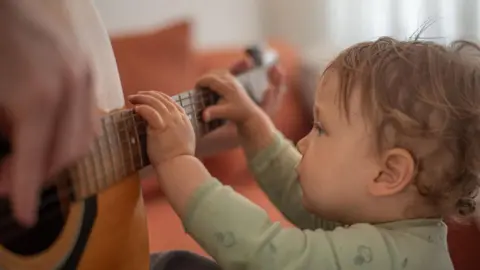
"Much of the learning at the beginning here is rather absorbed naturally," stated Adam.
It's via this osmosis that the family are expecting the child will adopt the British traits they aim to cultivate.
He noted the tutor had to be an individual who went to "the right kinds of schools – similar types of schools as the family plan to send their son to".
"The instructor just has to be the suitable individual, they'll be doing things they may not realize they're doing, just naturally," he said.
Expense Not a Factor
The family told the expert the chosen tutor should ideally also have understanding of or interest in riding, winter sports, artistic pursuits and musical activities so as to influence the child in a diverse set of hobbies.
More than that though, he said the family desired the tutor to enrol the child on a variety of classes so the child would be "horseback riding and starting an tool by the time they are approximately three years old".
In the family's perspective, helping their son become a "English gentleman" will bring about accomplishment and provide access.
"For all the pros and cons of that, because it's undoubtedly a class statement," he notes.
But, notwithstanding all this tutelage in "English culture", would the child adopt alleged cultural leaning from the globally influenced family he resides with regardless?
"Absolutely", said Adam. "The parents understand this might not succeed, but they've merely embraced the attitude of, 'let's give it a go and we should start as early as we can', because the price of it is irrelevant," he stated.
Impractical
A number of in the tutoring industry who express similar reservations.
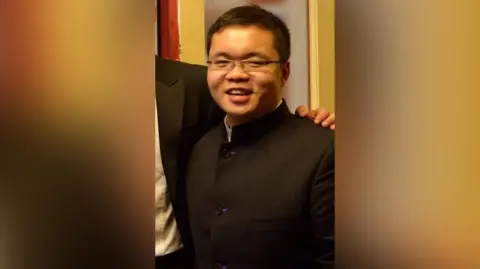
Peter Cui, head and founder of a tutoring service, who also offer private tutors, wrote that "the journey of becoming bicultural, or actually, discovering oneself, is something that must be experienced personally, not designed."
Peter explained that he had relocated from the Far East to the United Kingdom at the time of seven, and had been brought up experiencing and embodying both cultures. He continued to study at a prestigious UK institution.
"The notion that a single person can act as a living vessel of UK identity, an individual who can in some way transfer the qualities of a British gentleman onto a one-year-old child, appears naive and unfeasible," he commented.
"From my perspective, engaging a quintessentially UK tutor from infancy will not instantly create the result they hope for.
"I did not have such a figure, and however I have been fortunate enough to experience many of the experiences they aspire for their son."
He added: "The reality is, cultural identity can not be dictated from the external environment; it must be selected, and it must come from within."
Purchasing UK Culture
Of course, Britishness is something Adam hopes can be educated – and sold.
"In my view the reality that the world regards us in this light is something that we should be cherishing|valuing|appreciating


